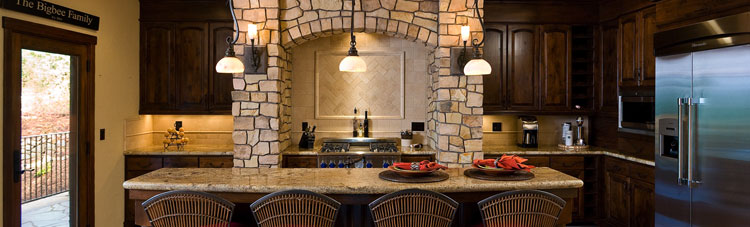
Showing posts with label kitchen countertop. Show all posts

Tuesday, October 28, 2014

What You Need to Know Before Using Marble in Your Kitchen


Marble is a classic, versatile choice for countertops, but there a few things you need to know before using marble in your kitchen. 

Some people prefer this high-maintenance beauty as it adds character and charm to any kitchen; others skimp on this surface because it is quite soft and porous and can easily be stained and scratched. To make sure if it is the best choice for your home and lifestyle, read on. Having the right expectations from the beginning means greater satisfaction and absolutely makes a difference. Here are a few things you need to know before choosing marble:


Interesting Facts about Marble
Marble is a metamorphic stone that’s created by the physical or chemical alteration of sedimentary carbonate rocks into a denser form through pressure and heat. The resulting rock has a crystalline nature and can be polished to perfection. Notice the veins of minerals deposits having patterns – it’s the reason why no two slabs are exactly alike. While it is prone to staining, marble is heat resistant, strong, and doesn't chip or dent.


More reasons to love marble countertops
Marble countertop brings a sophisticated touch to your kitchen. Most homeowners are attracted to the wide range of natural colorations. It comes in hues of white, gray, black, pink, yellow, and subtle patterns to suit all kitchen styles.


Because it mixes well with different materials, such as stainless, tile, and wood, white marble remains a popular choice for kitchen countertops. Another reason is that etching is less visible on white marble than on darker colors.


It is important to note that marble finishes affect the look and performance of the countertop. For an instance, a leather finish works great with dark marbles as the texturing can effectively hide fingerprints and other imperfections. For a casual look, you can never go wrong with a honed finish. If you want to bring out the details, such as veining and character, go for a polished marble.


How to Shop for Marble Countertops
Selecting marble needs preparation and research. First, know your size specifications. Most slabs are .75 to 1.25-inches thick and for those who want a wider counter, laminating the edge is recommended. There are a lot of colors and patterns to choose from so make sure you do your research and take in all the local options. Because slabs aren’t affixed with price tags, ask the representative about how the pricing works. This will help narrow your search and get the right materials that suit your budget.


Want to add a layer of elegance to your kitchen? Our team of experienced stone-craftsmen ensure that you receive complete satisfaction through the entire installation process, which we back with a 1-year product guarantee. Give Milan Stoneworks a call today for a free estimate on marble countertops.

Tuesday, October 21, 2014

Routine Care of Your Kitchen Countertop


Investing in a quality countertop and taking routine care can preserve the look and feel of the surface. 

Although there are materials that can withstand wear and tear from daily use, it can be easily damaged if durability doesn’t match closely with the aesthetic appeal. To avoid damaging your counter, consider these preventive steps so you can enjoy an attractive surface that looks fresh for years to come.


Keep it dry. Hard water marks can make the surface dull and the finish to appear blotchy and uneven. To prevent this, it is important to wipe the counter completely dry immediately after spills and cleaning.


Clean up spills. For most residues, all you need is warm soapy water or commercially available cleaners. Do not use strong chemicals and abrasive cleaning pads to clean the surface. Moreover, you can wipe the surface with diluted household bleach to disinfect the counter and sink. In order to safely remove food, gum, dried paint, or other adhered materials, scrape it off with a plastic putty knife at a 45 degree angle. Then use a damp cloth to remove any residual dirt.


Prevent heat damage. For most of the countertop, it is important to minimize direct heat exposure to protect the surface. Use coasters under hot drinks and heat trivets/pads when placing hot pots and pans on the counter. Always use a trivet under the oven toaster and other portable heat-generating appliances.


Prevent other damages. Use a cutting board when preparing food. You should also avoid sitting or standing on top of the counter as the added weight could be damaging.


Seal to increase durability. Natural stone is porous and may easily absorb food spills or hard water deposits. A sealer is recommended to keep stains from affecting the countertop. If you have a granite countertop, it must be sealed every six months or at least once a year. To find out if your sealant is effective, spill water on a small area. If the water starts to seep into the granite and made the surface appear darker, it’s time to reseal.
Repair damages. Sometimes accidents happen. For minor damages, you can purchase a repair kit and replacement that match the color of your countertop from a local home improvement store. Follow the instructions written in the manual. Be sure to wear protective gear, such as gloves and mask while you work to avoid contact with the chemical. If home repairs are beyond your DIY prowess, consider calling a professional.


With proper care, your countertop can stay looking good as new. To know more tips for cleaning your countertop, click here.

Tuesday, July 15, 2014

4 Low-Maintenance Kitchen Countertops


Are you determined to find and install a low-maintenance countertop? You’re not alone. Many people want a gorgeous counter to make workflow easy. We bet you don’t want to spend more time wiping stains, sponging, buffing, polishing, or having to reseal your countertop annually. Rather, you want an easy-to-clean countertop where you prepare home-cooked meals for your family, entertain your guests with a glass of wine, or simply chat with your kids over a morning meal.


During your next remodel, consider these low-maintenance kitchen countertops:


Engineered stone. Caesarstone and Silestone are the most popular brand names for engineered stone, or simply referred to as quartz. This material is made of crushed stone and polymer resin. An ideal countertop for the kitchen and bath, it is nonporous and resistant to stains and scratches. You can clean it by just wiping it down with mild soap and water.


Laminate. Laminate countertops do not only come in a wide variety of gorgeous patterns, colors, and finishes, but they’re just as easy to clean and stain resistant as you liked it to be.


Zinc. With a zinc counter installed in your kitchen, you don’t have to worry about wiping up every fingerprint. Thanks to its gorgeous patina! The material is nonporous and bacteria-resistant. Just a quick wipe down and voila, the mess is almost entirely gone!


Solid Surface. Solid surface countertops are resistant to staining, impact, and heat. If you noticed some light scratches on the surface, it can be sanded out and restored to its original appearance. It offers a worry-free upkeep and looks great with a little effort.


Corian and soapstone are among the crowd’s favorite. Corian solid surface has been used in many homes and public spaces and is highly customizable, durable, and easy to clean and maintain. Similarly, soapstone can keep up with whatever design imagination you may have. Known for its durability, density, and ability to withstand heat, this kitchen counter has been used for many years. This solid surface is resistant to stains and bacteria and can be wiped down with wild soap and water.  

Have you recently made the decision to renovate your kitchen?  If so, which type of countertop would you like? Give Milan Stoneworks a call today for a free estimate.

Tuesday, June 17, 2014

Tips For Cleaning Your Granite Countertop


Many homeowners don’t realize that cleaning a granite countertop properly is crucial to keep it germ-free and safe. According to a survey, 33% of homeowners use common all-purpose cleaner on their countertop while 28% use disinfecting wipes. Surprisingly, 19% use a glass cleaner for their natural stone.

To keep your granite in tip-top shape, follow these tips:

  • Household cleaners, such as glass cleaners, could affect the sealant and put granite surfaces at risk of getting stained. If you are using general cleaners, you might start to notice the difference in the look and feel of natural stone.

  • Experts recommend cleaning natural stone surfaces with a cleaner that’s formulated to wipe away stains without jeopardizing the protective seal.

  • If you’ve spilled something on the counter, remove it as soon as possible. Use a soft sponge, a nylon brush, or other non-abrasive material. Spray the surface with a granite cleaner then wipe it with a clean cloth.

  • Natural stone like granite can be very porous. It is important to seal your natural stone countertop with a sealer that helps repel spills on the surface, allowing time to wipe everything before penetrating your granite counter.
How do you keep your kitchen countertop clean? Let us know in the comments below!